

Things to know 👀
Utah moved to dismiss 14 criminal charges against prediction market Kalshi and its co-founders, CEO Tarek Mansour and COO Luana Lopes Lara, after Kalshi blocked users in the state. Attorney General Derek Brown said the charges could be refiled if Kalshi returns. Utah's civil suit against Kalshi, which seeks up to $61M, carries on.
🧠 The founders would have had to be booked in jail. Utah summoned both to appear in person at a Salt Lake City court on Dec. 4, and to report to the Salt Lake County Jail for booking. Brown told local outlet KSL, "The process is the process; we don't modify it based on who you are."
🧠 That is a big change for a company that spent the year on the front foot. Kalshi sued Utah in February, lost in federal court in August, and kept trading in the state for another 111 days. It was out 26 days after Utah put the founders' names on 13 felonies each.
🧠 Kalshi tells it differently. It calls the move a pause and puts it down to the August court loss, and both sides say there was no deal. Its statement left out the criminal charges, but for its part, Kalshi is suing on multiple fronts (as is the CFTC) to ensure prediction markets can be covered federally. This likely won’t fully resolve until it hits the Supreme Court.
🧠 Why did this work in Utah when it failed in Arizona? Arizona charged Kalshi in March, and a federal judge blocked the prosecution. In Utah, Kalshi's own lawsuit had already produced a federal ruling that state gambling law applies to it, so Utah's prosecutors had that ruling in hand when they filed. The state-by-state and court-by-court judicial system is producing diametrically opposed outcomes.
🧠 The lawsuit Kalshi filed to protect itself gave Utah its opening. Brown said he charged Kalshi, and none of its rivals, because of that existing fight. Going on the front foot against a state has a cost if you lose.
🧠 Having the federal regulator onside was no help. The CFTC, which oversees Kalshi, sued Utah and asked for an emergency order to stop the enforcement, and Utah filed the criminal charges the same week. A month on the federal judge has yet to rule, and he said in court that gambling regulation sits with the states.
🧠 I can see why Kalshi made the trade. Kalshi says it has 177,000 users in Utah. A judge in New York, a far bigger state, declined an emergency request to shut Kalshi down that same week. Utah is less of a priority.
🧠 The charges also help clear the rest of Utah as an example to others. Utah sent cease-and-desist letters to Kalshi's rivals, and Robinhood, DraftKings, FanDuel, Fanatics, Novig and ProphetX have all pulled their prediction markets from the state. None of them were charged, but you have to imagine they’ll take it seriously.
🧠 Kalshi's tone has changed too. In October, it called the charges a "crazy overreach" and promised to stop them in court. This week its new general counsel, Yaakov Roth, said Kalshi is ready to work with state attorneys general on "reasonable interim measures" while the courts decide who regulates prediction markets.
🧠 Kalshi's investors have a fair complaint. Mansour and Lopes Lara took the slow route and got a federal license before they launched. One backer, Alex Immerman, said charging founders who made that choice "sends a terrible message to entrepreneurs." I doubt the states that don’t want gambling at all care about that fact.
🧠 Utah is also the easiest case a state could bring. Its constitution has banned every form of gambling since 1896, and it is one of two states with no legal gambling at all. A state that licenses and taxes sportsbooks has a different argument to make.
🧠 Until prediction markets have consistent consumer protections and focus less on sports, this mess will continue. There are a small handful of legitimate sports hedging use cases, but overwhelmingly the use is for people who are betting via another channel. I can’t see how that use case survives in its current form. I fear they’ll have to be told to stop offering that product because it's the key money maker.
The WSJ reported on 24 November that Stripe is negotiating a tender offer that would value it at more than $200B, up from $159B in February. Current and former employees sell shares, and existing investors are expected to buy some of them. The deal would likely close early next year and the price could change.
🧠 You could buy four PayPals for $200B. PayPal processed $1.79T in 2025, close to Stripe's $1.9T. Stripe and Advent reportedly bid $53B for all of PayPal in July, then walked away in August. I don’t think that management team has proven in the time since they can do any better solo.
🧠 Volume and revenue growth explain the valuation premium. Stripe's volume grew 34% in 2025 and PayPal's grew 7%, and in Q2 this year new businesses launching on Stripe were up 86% YoY. That's obviously attractive to investors in a market where others are not delivering such rapid growth.
🧠 The price is rising more slowly than it did a year ago. The step up from February would be 26%, and last year's step was 74%. If 2026 volume grows as 2025 did, the business is growing faster than the price. (Although this is a tender offer for employee liquidity, so we should take everything with a grain of salt)
🧠 We're clearly in a market where private companies are rewarded for growth. By contrast, the public market is nervous about the long-term sustainability of the AI trade.
🧠 Stripe has been a big beneficiary of that trade, and its annual letter says all of the top AI companies run on it. Given that, there's a chance this growth rate doesn't last forever.
🧠 I'm reminded of 2021, when Stripe's valuation peaked at $95B during the bull market for online businesses. By 2023, it had dropped to $50B. We could be heading for a similar quiet period in tech-adjacent businesses, with less VC fuel coming into the market as public valuations correct.
🧠 Not a disaster by any means when you can recover. Stripe has repriced its shares every year since, at $65B, $91.5B, $159B and now $200B+, which is 4x the low. It also bought back shares with its own cash in the last two tenders.
🧠 But a drop like that stands out when your stock price doesn't change day by day. PayPal's price moves every day, and Stripe's moves whenever it does a tender offer, so it makes news.
🧠 This round also suggests the perpetually private machine* may stay private a lot longer. If you have free cash flow, growth, and made an $8bn acquisition (OpenRouter), then why go public? There’s very little obvious upside.
🧠 I wonder if 2026 volume beats last year's 34%? That number should land in the annual letter in February, around the time this deal closes. Super curious to read it. All the data I’ve seen coming from Stripe on social media suggests it's actually accelerating.
*Term coined by Alex Johnson
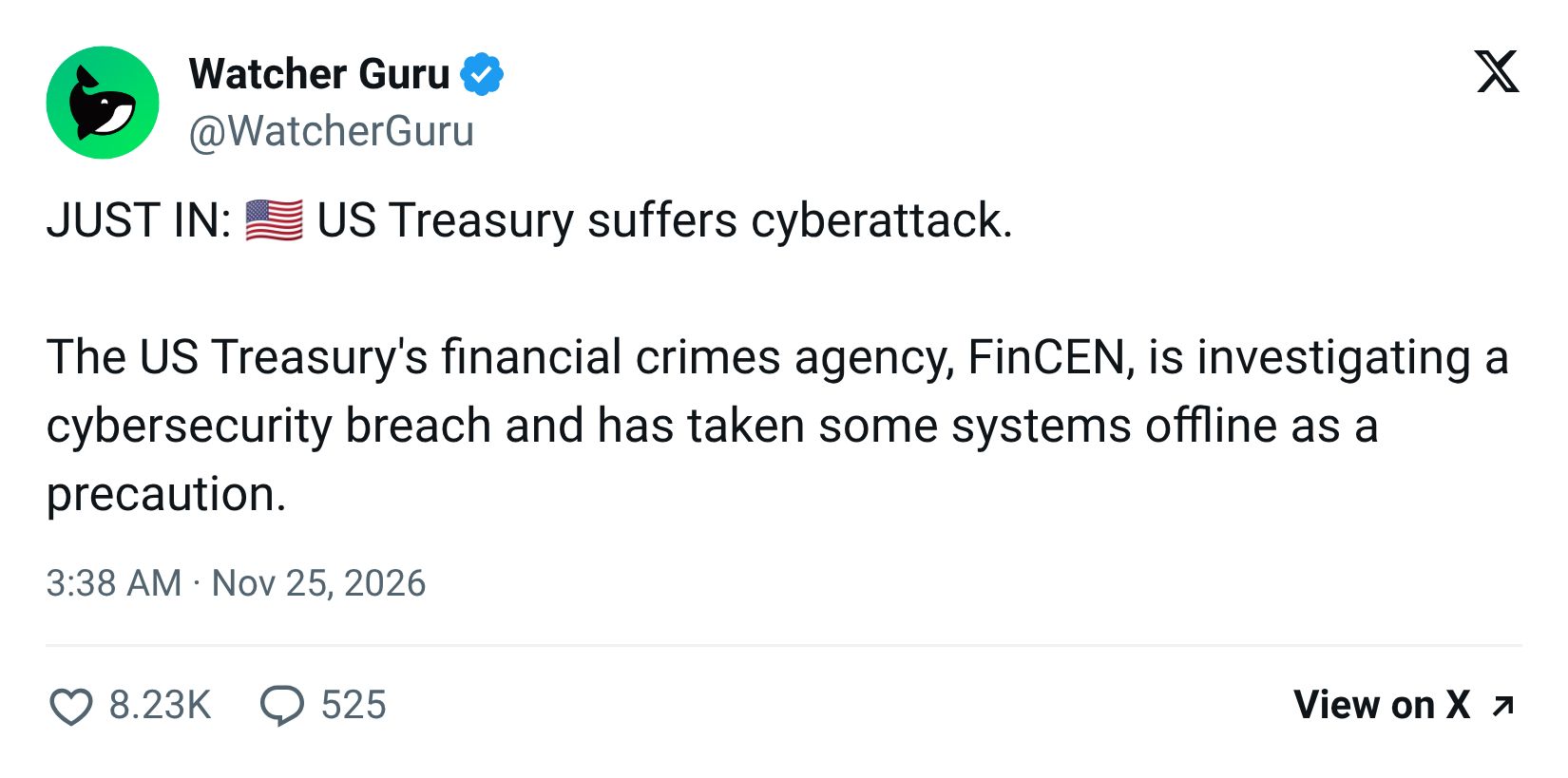
FinCEN is the US Treasury bureau that collects Suspicious Activity Reports (SARs) from banks, familiar to any of you who work in compliance. On Nov 24, it said hackers had accessed some of its systems and that it had taken some offline. The same day, it gave banks that file SARs in bulk until Dec 30 to send any report due since Nov 18.
🧠 It's interesting that bulk SAR filing went down six days before FinCEN said anything about a hack. The software vendors that file for banks reported failures from Nov 18. FinCEN's notice extending the deadline calls it a "service disruption" and gives no cause.
🧠 Tells you how old and creaky some of our critical infrastructure for financial compliance is. The outage hit the channel banks use to send SARs in bulk. FinCEN takes in about 13,000 SARs a day, and the top 10 filers send about 45% of them.
🧠 Banks got more time to file, and the Fed, FDIC, NCUA and OCC said they'll take no action over late reports. You should think so too! Banks obviously still have to monitor for suspicious activity, so they keep finding cases while the pile of unsent reports grows.
🧠 What could the hackers read? FinCEN says it sees no evidence so far that they reached its databases of SARs or company owners. It has yet to say which systems they did reach. You have to imagine they wanted to know what FinCEN did to exploit any gaps in its coverage.
🧠 SARs are confidential by law, because each one names a customer a bank suspects of illicit activity. In 2020 an insider leaked thousands of them to journalists, who published the FinCEN Files. A hack of that database would expose who banks reported, and why.
🧠 It's the third time since August that a government system has caused trouble for banks and fintechs. The Fed's database of bank information went down in August and hit systems that serve its discount window. In September, attackers used a hacked Italian government email to pose as police and ask Revolut for customer data, and Revolut confirmed it was fooled.
🧠 Black October is rolling into November. Security researchers named last month Black October after a run of hacks that ended with a multibillion-dollar theft at Binance. Within days of the FinCEN news, reports said intruders had reached an unclassified CIA system and an FBI database of warrants and background checks.
🧠 Investigators suspect the CIA intruders used an AI hacking tool. It's called Artex, it's open-source, and the FBI warned about it this month. FinCEN has yet to say who got into its systems or how. Every CISO is at red alert since this thing happened.
🧠 I think banks now have to plan for the regulator going down, the same way they plan for a vendor going down. Like, can your systems handle that? Do you have processes to make sure you catch up on previous SARs? Or is it all manual?
🧠 The silver lining might be a government that is forced to invest in more resilient (dare I say more usable) national infrastructure. So many portals and SFTPs are still out there running on the same tech we’ve used since the late 80s and early 90s. Probably due an upgrade.
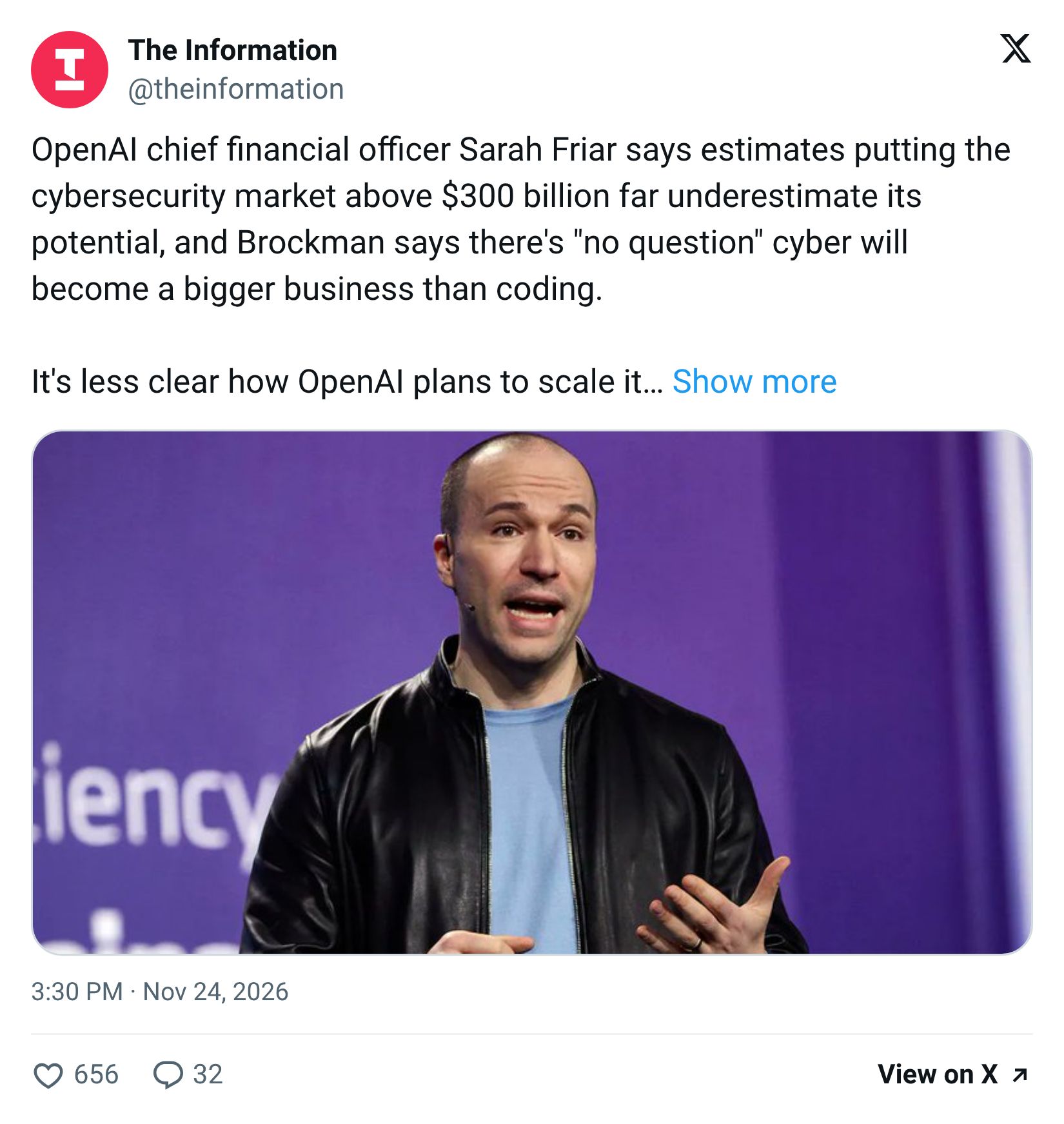
🧠 I saw a report this week that OpenAI expects cybersecurity to become a bigger business than coding. Its CFO said estimates putting the cybersecurity market above $300bn understate its potential. Nothing like unleashing a problem and then selling the solution 😆
Four Senate Democrats, led by Chris Van Hollen and Elizabeth Warren, wrote to SEC Chair Paul Atkins on 24 November asking him to withdraw the Innovation Exemption. The SEC issued it on 17 September, and it lets tokenized stock venues trade for five years without registering as an exchange. A second letter asks the SEC to drop Regulation Crypto Assets, its August proposal to let crypto projects raise up to $75M in 12 months without registering.
🧠 The exemption still stands for now. Withdrawing it is the SEC's decision, and the SEC has yet to respond. But you have to imagine the Wall St firms that were reliant on it, suddenly feel a little less confident
🧠 The letter came one day after NYSE's parent started using the exemption. OKXICE, the joint venture between OKX and ICE (which owns the NYSE), began trading six tokenized stocks on Monday 23 November (of an initial list of 67, but most companies opted out).
🧠 Democrats get more ways to press the SEC from January. They’ll take the Senate with 56 seats, and Warren is the top Democrat on the Banking Committee, which holds the SEC's oversight hearings and votes on its nominees.
🧠 The concern runs wider than Warren. A week earlier Mark Warner, Ruben Gallego, Angela Alsobrooks and Catherine Cortez Masto sent Atkins 13 questions about the same exemption. All four helped negotiate the Clarity Act, the crypto market structure bill that failed in the Senate in September.
🧠 The complaints are about how the market works. Venues under the exemption have no duty to show the best price or report trades in real time, and a company gets 30 days to object when a third party tokenizes its shares. The fear is this splinters liquidity from the existing financial market and creates regulatory arbitrage with less transparency.
🧠 The senators also gave the SEC a fallback. If it keeps the exemption, they want changes made through formal public rulemaking. The SEC issued the exemption before taking public comments, then requested comments in the order itself.
🧠 Wall Street wants formal rulemaking too. SIFMA made that case in an October 19 letter and a November 2 blog post. The next SEC chair can withdraw an exemption, and a rule that has been through public comment is much harder to undo.
Fortune reported on Wednesday that the two are discussing a deal to connect Meta's personal AI agent to Amazon's store. Amazon blocked Muse in September. Both CEOs would need to sign off.
🧠 The talks are focussed on two issues, search results and ads. Amazon worries about the quality of the products Muse would show. An agent could skip the sponsored listings, and ads are a $68.6B business for Amazon.
🧠 Andy Jassy said last week that Amazon hasn't ruled out letting outside agents in if there is "a fair exchange of value". Sounds a lot like "either display my ad or pay me what I would have made?"
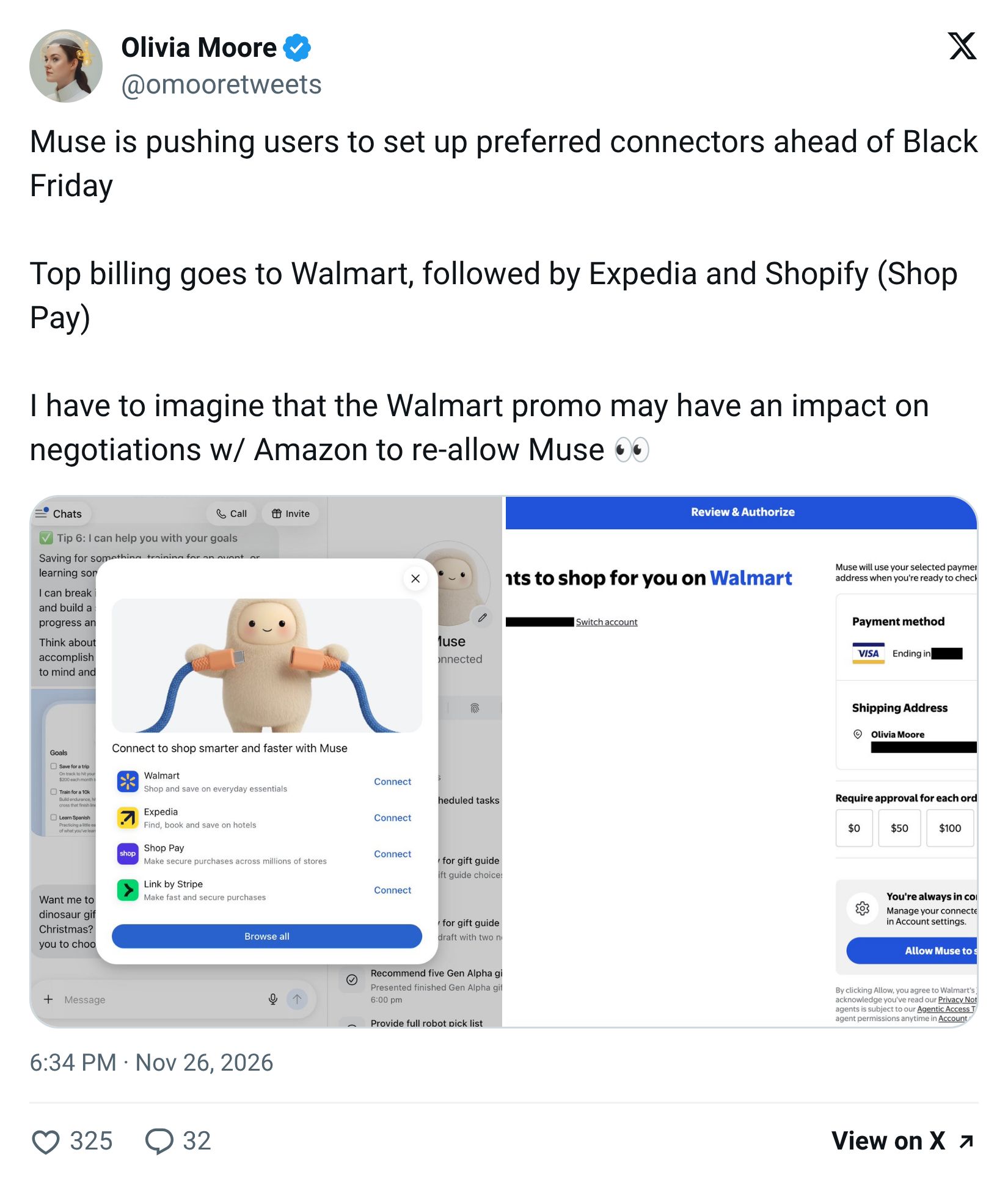
🧠 Amazon is now looking like an outlier with a lot of merchants integrating directly to personal agents. Walmart put its Black Friday deals in Muse on Tuesday through its own Agent Gateway. You sign in at Walmart, set a spending limit and pay with the card saved in your Walmart account.
🧠 More merchants are saying yes than not. Muse launched in the UK 🇬🇧(yay!) with 14 partners, including Sainsbury's, Argos, Ocado, M&S, Currys and ASOS. For US readers outside of Amazon that would cover about 80% of my day to day spend.
🧠 And there’s some very early data that agents are good for merchants. Forter reported that over 10,000 sessions, agents spent $227 on average, vs $133 for humans. Now, that could very well be a sample bias (people with agents skew tech-savvy high income?) But it’s also a signal agents might not be all downside.
🧠 I’m surprised to see the PSPs not leaning more into “agent integration” yet. They’re still talking about building discoverability into those agents. Which, makes sense if you view the agent as ChatGPT and the task being searching.
🧠 I said on a stage last night that Meta has the relationships to smooth over the vast majority of these blocks on the merchant side. And they're likely willing to pay to make it worth it for the merchants. Which in the short term means users of Muse get a better experience than other agents.
🧠 The banks might be harder to convince. JPMorgan, Citi and Bank of America block outside agents from customer accounts. So do HSBC, Barclays and Lloyds.
🧠 But did you notice what OpenAI did with Chase? To add a Chase card to ChatGPT Wallet, you approve the connection inside the Chase app. You tell your bank "this is my agent and I delegated to it", and you say it with your official log in.
🧠 I can see all banks wanting to do that. Maybe it even becomes some sort of standard. Plaid already gives agents like Muse read-only access to bank data. I feel like Plaid should abstract this step too. But some banks will want to control it. There’s some answer here that involves the banks getting security data and economics, but it might get lost in the endless debate about “consumer permissioned accounts”
4 Companies 💸
1. Henry Labs — Google Universal Cart for everyone else.
Henry Labs lets creators or non-e-commerce sites become shoppable platforms. Merchants and platforms can keep their existing affiliate links, see which recommendations turn into orders, and add a checkout fee. Henry charges the platform for API usage through credit-based plans.
🧠 It’s like affiliate links on steroids. Aesthetic AI is a good example of who would pay for this. It already turns creator content into storefronts, and its founder says Henry gave it two ways to earn from the sale, through affiliate commissions and transaction fees.
2. Axorum — Agent spending controls for finance platforms
Axorum gives spend and accounts payable platforms a way to enforce finance rules before an AI agent pays. It checks who authorized the agent, whether the payee is allowed, and how much of the shared budget is left across cards, bank transfers, and stablecoins. It records approvals and refusals in a subledger and leaves the movement of money to the payment provider.
🧠 There’s so many of these. Some are becoming banks. Others are going ledger first. And most of the big B2B neobanks are building this into their controls. For a lot of companies, I can see this fitting inside the accounts payable platform that already knows who approved the invoice and whether it’s been paid.
3. Harbor — Insurance for companies deploying AI agents
Harbor helps companies identify the AI agents they’ve deployed, test how those agents can fail, and put controls in place. It also brokers insurance for specified risks such as an agent taking the wrong action or leaking data, with options for the company’s own losses, third-party claims, and regulatory defense.
🧠 Insurance unlocked self-driving cars, and it could do something similar for agent usage in enterprise. What’s unique here is every enterprise has its own risk profile. That’s not unlike classic car insurance, vs. a self-driving car where it’s very similar for all vehicles. So you have to wonder what this loss ratio looks like at scale over time.
4. Kabilio — AI bookkeeping for Spanish accounting firms
Kabilio helps Spanish accounting firms process client invoices, reconcile bank transactions, and post approved entries into the A3 accounting software they already use. Firms can also give clients a place to issue VERI*FACTU invoices, track expenses and cash flow, and share records as they go.
🧠 Spain has moved its invoicing software deadline to October 2028. Accountants still have a reason to call their clients about how they bill. In turn, this helps the accountant put the invoices somewhere that's easy to see, and now the software is matching invoices to accounts every month or quarter end automatically. Saving everyone time.
Good Reads 📚
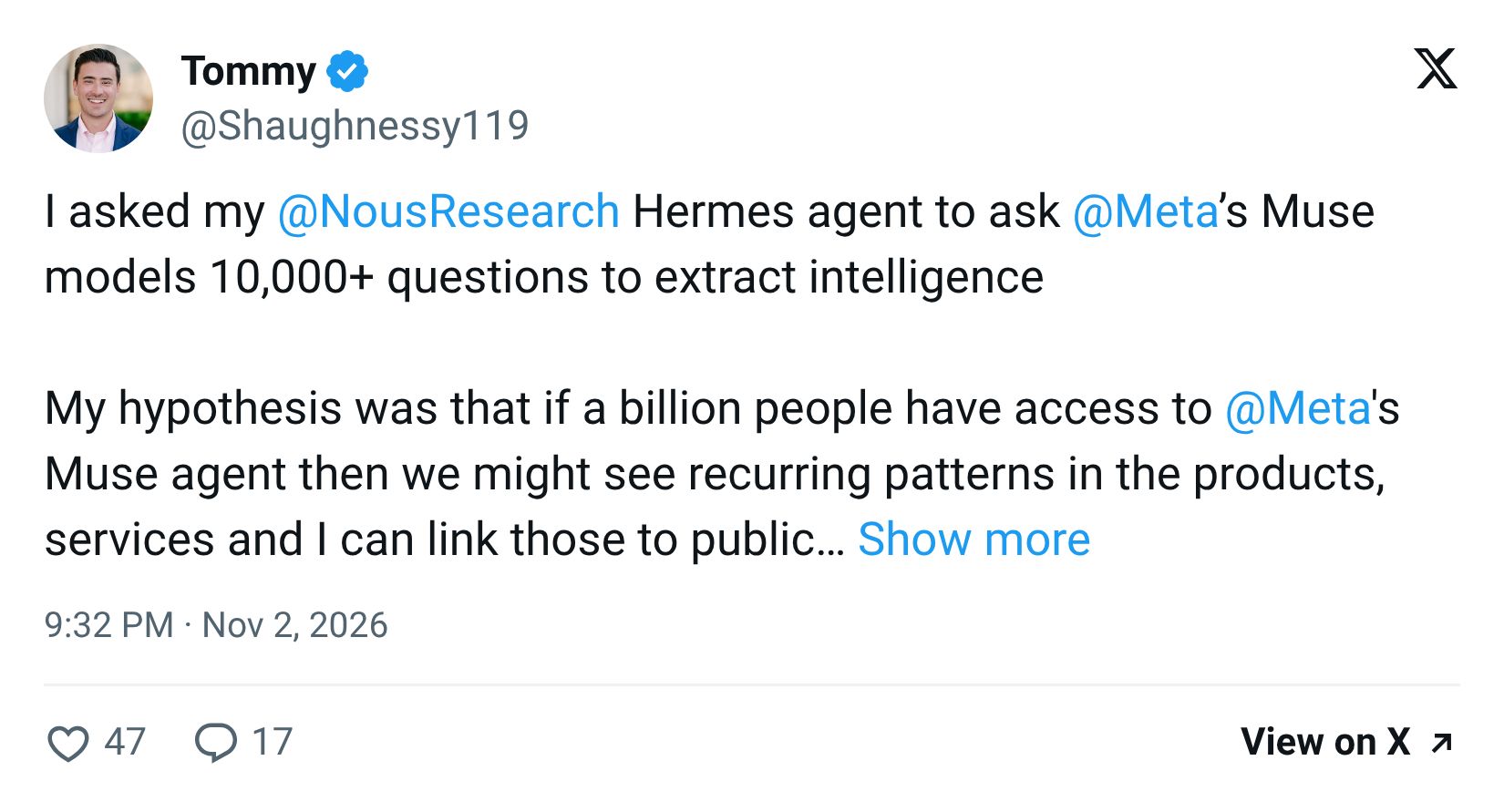
In an informal test of over 10,000 questions, Muse was willing to tell people to buy less, recommended free alternatives, bought fewer paid seats and suggested repairing equipment instead of replacing. Fidelity was the primary choice in 58 of 70 brokerage-platform scenarios. Square repeatedly surfaced for small-business payments, and Best Buy as a shopping destination.
🧠 The study hypothesized that the popularity of those products is aligned to their popularity with customers and the strength of existing pricing/customer reviews.
🧠 Which does make you think there is a future in which your pricing and customer reviews could really matter unless… Just like WhatsApp was never going to be used for ads, Muse is “never going to be used for ads” until it is.
Tweets of the week 🕊
Shot:
Chaser:
That's all, folks. 👋
Remember, if you're enjoying this content, please do tell all your fintech friends to check it out and hit the subscribe button :)
Want more? I also run the Tokenized podcast and newsletter.
(1) All content and views expressed here are the authors' personal opinions and do not reflect the views of any of their employers or employees.
(2) All companies or assets mentioned by the author in which the author has a personal and/or financial interest are denoted with a *. None of the above constitutes investment advice, and you should seek independent advice before making any investment decisions.
(3) Any companies mentioned are top of mind and used for illustrative purposes only.
(4) A team of researchers has not rigorously fact-checked this. Please don't take it as gospel.
(5) Citations may be missing, and I’ve done my best to cite, but I will always aim to update and correct the live version where possible. If I cited you and got the referencing wrong, please reach out
